Posted on Leave a comment

Are Porcelain Pavers Durable and Strong? Discover the Reality

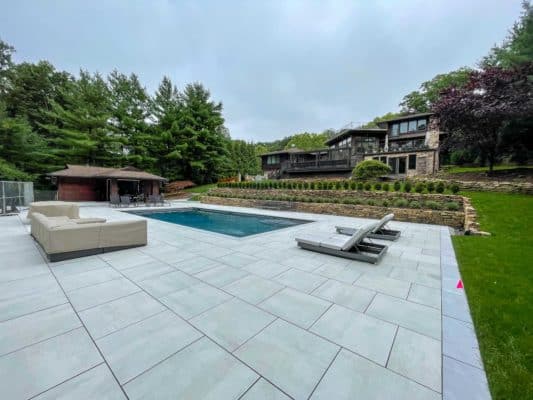
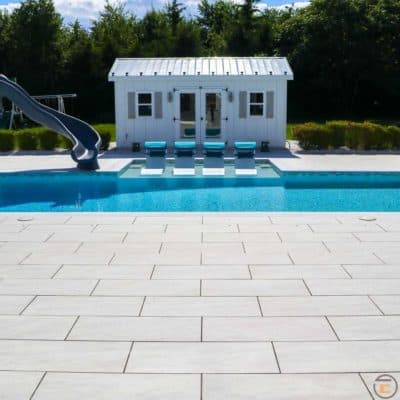
Porcelain pavers are becoming a top choice for enhancing outdoor areas like patios, pathways, and pool surrounds, thanks to their perfect mix of aesthetic appeal and robustness. Known for their impressive low water absorption rate, excellent slip resistance, and formidable strength, these pavers gracefully withstand the rigors of outdoor environments.

The advanced production process of porcelain pavers endows them with qualities that often surpass those of natural stone and are more durable than traditional concrete options. Both homeowners and professionals in the field commend these pavers for their consistent performance under heavy use and in various weather conditions.

Continue reading to explore the key characteristics and benefits that establish porcelain pavers as a reliable and attractive option for outdoor landscaping projects.

Key Takeaways

  • Porcelain Pavers Boast Low Water Absorption Rates That Minimize Water Damage and Maintenance Needs
  • High Resistance to Abrasion and Breakage Makes Porcelain Pavers Ideal for High Traffic Areas
  • The Vitrification Process During Manufacturing Endows Porcelain Pavers With Superior Density and Durability
  • Safety Is Enhanced With Porcelain Pavers Due to Their Slip-Resistant Surface, Making Them Suitable for Wet Areas
  • Porcelain Pavers Combine Strength, Low Maintenance, and Aesthetic Appeal, Making Them a Practical Choice for Various Outdoor Applications

What Makes Porcelain Pavers Durable?

Poreless and impenetrable, porcelain pavers endure where other materials falter. With a manufacturing process designed to produce a dense, durable paver, porcelain tiles offer unparalleled strength. Their low water absorption rate means less risk of water damage, making them fit for areas exposed to the elements.

FeatureBenefit
Low Water AbsorptionReduced Efflorescence and minimized Water Damage
High Breakage ResistanceEnduring Surface Suitable for High Traffic Areas
Resistance to AbrasionLongevity in Flooring Applications
Slip ResistanceSafe Walkway and Patio Options

The PEI rating serves as a reliable indicator of the resilience of porcelain tiles, offering homeowners a trusted guide to their durability. This rating system is crucial for identifying tiles that are capable of withstanding the wear and tear typical in high-traffic areas, ensuring that these tiles remain a valuable addition to any space over time.

At Elegance by NT Trading, the creation of our porcelain pavers involves a meticulous vitrification process. By fusing natural raw materials under high temperatures, we produce pavers that boast superior density and minimal porosity. These characteristics are pivotal in enhancing the heat and stain resistance of our products, reflecting the dedication and expertise we put into engineering these high-quality porcelain solutions.

Comparing Porcelain Pavers with Other Materials

mineral porcelain pavers from top view.

When homeowners consider materials for their patios, driveways, or pool decks, porcelain pavers stand out as a strong contender against traditional concrete pavers or natural stone.

Porcelain’s low water absorption and high breakage resistance ensure its durability, while concrete may be susceptible to cracking and stone to weathering. Porcelain pavers maintain their structural integrity and aesthetic appeal under various outdoor conditions, marking them as a robust choice for hardscape projects.

Travertine pavers exude natural beauty but may require more maintenance and are prone to discoloration and efflorescence over time. In contrast, the hardiness of porcelain pavers minimizes cleaning and sealing demands, largely due to their low maintenance nature stemming from their rigorous manufacturing process.

Porcelain’s stain resistance and ability to repel mold and mildew contribute to its longevity, making it a practical solution for areas where persistent elegance is desired.

The test results stemming from ASTM standards reveal porcelain pavers’ superior abrasion resistance, a crucial factor for public areas with heavy foot traffic like hospital lobbies.

Ceramic tile may crack under such pressure, while porcelain’s dense composition, achieved through the vitrification process, can sustain these conditions, exemplifying its suitability for commercial applications. The scientific approach to product testing assures contractors and homeowners alike of porcelain’s long-term performance.

Temperature fluctuations challenge any paving material, and here again, porcelain pavers exhibit remarkable resilience. Quarry tile may show signs of wear under constant thermal change, but porcelain sustains its form and resists warpage, making it a fitting selection for areas experiencing a wide range of temperatures. The peace of mind that comes with choosing a reliable product solidifies porcelain pavers as a premier choice for enhancing any living space.

The Impact of Weather on Porcelain Pavers

Porcelain pavers are highly acclaimed for their exceptional resilience to various weather conditions, making them an ideal choice for outdoor spaces. Here’s how they stand up to different weather elements:

  1. Heat Resistance: Porcelain pavers are remarkably resistant to high temperatures. This makes them an excellent choice for areas exposed to intense sunlight, as they do not warp or crack under heat. Their ability to maintain color and structural integrity even in scorching temperatures is a significant advantage.
  2. Cold and Freeze-Thaw Cycles: In colder climates, porcelain pavers are resistant to frost and can withstand freeze-thaw cycles. Unlike some materials that can crack or split when water seeps in and then expands as it freezes, porcelain’s low porosity prevents water absorption, thereby reducing the risk of freeze-thaw damage.
  3. Moisture Resistance: Porcelain pavers have a very low water absorption rate, which means they are less likely to suffer damage in rainy or damp conditions. This low porosity ensures that the pavers do not become waterlogged, preventing issues like mold growth and structural weakening.
  4. UV Resistance: Another significant advantage of porcelain pavers is their resistance to UV rays. They do not fade or discolor over time, even when exposed to prolonged sunlight, ensuring that their aesthetic appeal remains consistent.
  5. Durability in Varied Climates: Overall, porcelain pavers maintain their appearance and structural integrity across a range of climatic conditions. Whether it’s a hot, sunny area, a region with heavy rain, or a cold area with frost, porcelain pavers prove to be a durable and long-lasting option.

Maintenance and Longevity of Porcelain Pavers

Rigorous lab tests per ISO standards reveal that porcelain pavers, with their minimal water absorption and high slip resistance, demand little upkeep from the homeowner. Simple practices in cleaning, without the frequent need for sealing, often suffice to maintain their pristine condition.

The endurance of porcelain paving units is manifest in their continued performance in high-traffic areas, resisting wear and preserving their color consistency. Installers and homeowners alike appreciate this aspect, noting that the long-term visual and structural integrity of porcelain pavers rarely wanes, even under consistent use.

Periodic maintenance routines for porcelain pavers are simplified due to their inherent resistance to staining and abrasion. Homeowners need not worry about complicated procedures; routine cleaning with mild detergents is typically adequate to keep these pavers looking new.

Porcelain tiles, especially those graded with a higher PEI rating, stand the test of time, keeping driveways, patios, and pool decks looking spectacular for years. Experts in the field agree that the lifespan and durability afforded by the precise manufacturing process of porcelain pavers make them a sound investment for any outdoor hardscape project.


[embedyt] https://www.youtube.com/watch?v=HWXmaBT-IlQ[/embedyt]


Load-Bearing Capacity of Porcelain Pavers

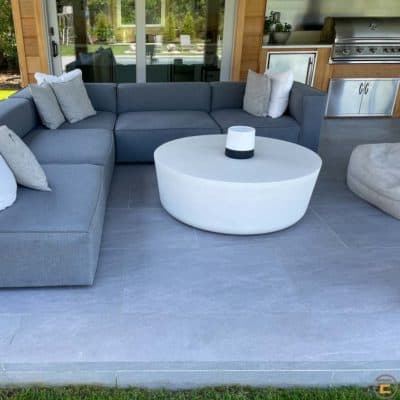
Porcelain pavers not only elevate outdoor aesthetics but also boast a robust load-bearing capacity. This strength ensures they remain unscathed under the weight of patio furniture, grills, and even vehicles when used in driveway applications: a vital consideration for homeowners mapping out their space.

Area of UseWeight ConsiderationPorcelain Pavers’ Response
PatiosOutdoor FurnitureHolds up without cracking
DrivewaysVehicular TrafficWithstands the pressure of vehicles
WalkwaysFoot TrafficEndures without showing wear
Pool DecksWater-soaked ActivityPerforms well withstanding poolside use

Engineers and manufacturers collaborate to create porcelain pavers that can effortlessly support significant weight, a quality that is supported by rigorous test methods. The high breaking strength of these pavers defies the challenges posed by heavy traffic areas, maintaining structural integrity.

The application of a pedestal system offers an innovative solution for enhancing the load-bearing capabilities of porcelain pavers. By evenly distributing weight across pedestals, even terraces and rooftop gardens can exploit the strength of porcelain tiles for breathtaking, yet functional, outdoor living spaces.

Supplier consultations often highlight the strategic placement of thicker porcelain slabs for areas anticipated to encounter heavier loads. This planning is critical for ensuring that the desired outdoor hardscape is both beautiful and built to last, maximizing the utility of the porcelain paver product.

Safety Features of Porcelain Pavers

philly white room porcelain pavers

Safety remains a primary concern for property owners contemplating the installation of porcelain pavers in areas where activity abounds. The intrinsic safety features of porcelain tiles encompass a textured surface that ensures superior slip resistance, especially in wet conditions, providing a secure environment for both children and adults alike.

Manufacturers heed the highest standards of slip resistance, warranting that areas like pool decks and bathrooms remain safe underfoot. The diligent adherence to test methods, like the dynamic coefficient of friction (DCOF) tests, ensures that pedestrians maintain traction on porcelain surfaces, thus minimizing the risk of accidents.

Porcelain pavers also excel in offering a hardy and stable footing even when cut to fit unique layouts, which is particularly important for high-traffic walkways and commercial spaces. The unwavering commitment from manufacturers to safety translates into products designed to reduce hazards in areas prone to spills or moisture.

Homeowners and contractors can feel assured about the safety quotient of porcelain pavers when considering them for living spaces. Experts advocate for the use of porcelain due to its superior safety features, which are maintained without compromising the aesthetic quality of the paving material.

Frequently Asked Questions

How do porcelain pavers compare to other materials in terms of durability?

Porcelain pavers, with their low water absorption and high breakage resistance, often outperform materials like travertine and concrete pavers in durability tests. They are engineered to endure heavy traffic areas, and resist stains and fading, making them a superior choice for both residential and commercial applications.

Can porcelain pavers withstand different weather conditions without damage?

Porcelain pavers possess exceptional thermal shock resistance, enabling them to handle extreme temperatures without cracking. Their low water absorption rate ensures resistance against frost, reducing the risk of water damage even in punishing weather conditions.

What kind of maintenance is required for porcelain pavers, and how long do they typically last?

Porcelain pavers, renowned for their minimal maintenance requirements, simply need routine cleaning with mild detergent and occasional sealing to sustain their allure and resist the elements. With proper care, these durable tiles can grace an outdoor space with their beauty and functionality for over two decades, a testament to their robustness in the face of heavy foot traffic and weather-related wear and tear.

What is the load-bearing capacity of porcelain pavers, and can they be used for driveways or other high-traffic areas?

Porcelain pavers boast an impressive load-bearing capacity, making them a suitable choice for high-traffic areas such as driveways, where the demand for durability is paramount. The manufacturing process of these pavers often results in a dense, hard-wearing product that can withstand the pressures of vehicular traffic, underscoring their adaptability for both residential and commercial applications.

What safety features do porcelain pavers have to prevent slip and fall accidents?

Porcelain pavers are engineered with safety in mind, boasting a surface texture that enhances slip resistance, a feature particularly vital in wet conditions. Backed by rigorous test methods such as the Dynamic Coefficient of Friction (DCOF) test, these pavers meet industry standards set by organizations such as the Porcelain Enamel Institute (PEI) and American Society for Testing and Materials (ASTM), assuring homeowners of a reliable and secure flooring option for high traffic areas like patios and pool decks.


porcelain-pavers-catalog

Conclusion

In conclusion, porcelain pavers stand out as exceptionally durable and strong options for outdoor flooring. Their low water absorption rate not only minimizes water damage but also significantly reduces efflorescence. Coupled with high breakage resistance, these pavers are ideal for areas with heavy foot traffic.

The vitrification process used in manufacturing our porcelain pavers at Elegance by NT Trading results in products with remarkable density and minimal porosity. This contributes to their superior heat and stain resistance, ensuring they maintain their pristine appearance over time.

When compared to materials like concrete and natural stone, porcelain pavers consistently outperform in preserving their structural integrity and aesthetic under various conditions, including challenging freeze-thaw cycles and thermal shocks.

Maintenance of our porcelain pavers is refreshingly simple, requiring only routine cleaning without the need for frequent sealing. Their significant load-bearing capacity is more than capable of supporting the weight of patio furniture, vehicles, and regular foot traffic, all while resisting stress and wear.

Safety is a paramount consideration in our product design. The textured surfaces of our porcelain pavers offer excellent slip resistance, ensuring secure footing in all weather conditions.

Overall, choosing porcelain pavers from Elegance by NT Trading means opting for a solution that is not only long-lasting and practical but also enhances the beauty of your outdoor spaces. To see our full range of porcelain pavers and to get personalized advice for your project, we warmly invite you to visit our showroom. Discover how our products can transform your outdoor area into a durable, safe, and stylish space.
Posted on

Stylish Durability: Transform Rooftops and Decks with Porcelain Pavers

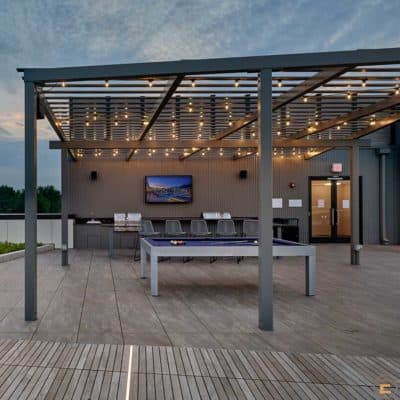
When it comes to enhancing the outdoor spaces of rooftops and decks, few options offer the perfect blend of style and durability quite like porcelain pavers. These versatile and sophisticated paving solutions have become the ultimate choice for individuals seeking a long-lasting, visually appealing outdoor environment that can withstand various weather conditions.

Elevate your outdoor spaces with porcelain pavers, the ultimate solution for stylish and durable rooftops and decks. Discover the beauty and resilience of porcelain pavers that withstand weather while offering easy maintenance. Transform your outdoor haven today

Why Porcelain Pavers Shine Bright

Porcelain pavers are a prime example of how advancements in material technology can revolutionize outdoor design. Crafted from high-quality porcelain, these pavers offer exceptional resistance to wear, fading, and staining. This inherent durability makes them a prime candidate for rooftop and deck installations where exposure to the elements is constant. Unlike traditional materials, porcelain pavers retain their color and texture over time, ensuring that your outdoor space remains as stunning as the day it was installed.

The Aesthetics of Elegance

One of the most alluring features of porcelain pavers is their ability to replicate the appearance of natural stone, wood, and other premium materials. This opens up a world of design possibilities, allowing homeowners and designers to create outdoor spaces that resonate with their preferred style. Whether you envision a sleek modern rooftop lounge or a rustic deck with the warmth of wood, porcelain pavers can bring your vision to life with unmatched precision.

Weathering the Storm: Porcelain’s Resilience

Rooftops and decks are constantly exposed to varying weather conditions – from scorching sun to torrential rain. Porcelain pavers are designed to handle this challenge effortlessly. Their low water absorption rate prevents cracking and freeze-thaw damage, ensuring that your outdoor haven remains structurally sound even in the harshest climates. This resilience not only adds to the longevity of your investment but also minimizes maintenance efforts.

Beyond Beauty: Easy Maintenance and Sustainability

While porcelain pavers elevate the aesthetics of your outdoor space, they also contribute to stress-free maintenance. Unlike wood or concrete, porcelain doesn’t require sealing or special treatments. Regular cleaning with water and mild soap is often sufficient to keep them looking their best. Additionally, their longevity makes them an environmentally friendly choice, reducing the need for frequent replacements and minimizing the overall environmental impact.

Contact Us to begin your journey with Elegance by NT Trading. Let’s create together and bring your design aspirations to life.

Follow us on Instagram to experience a visual journey through our curated collection of the finest travertine, marble, and porcelain materials. Our posts showcase not only the stunning beauty of these elements but also their potential to transform spaces into awe-inspiring havens of elegance.

Porcelain pavers offer a unique opportunity to craft outdoor spaces that stand the test of time while exuding elegance. With their remarkable durability, stunning aesthetics, and ease of maintenance, these pavers are a clear choice for rooftop and deck projects. By choosing porcelain pavers, you’re investing in more than just a surface – you’re creating an enduring masterpiece that enhances your outdoor lifestyle.

So, if you’re ready to transform your rooftop or deck into a haven of style and durability, look no further than the captivating charm of porcelain pavers.

Elegance by NT Trading on social media is more than just a follow; it’s an invitation to join a community of design enthusiasts and seekers of beauty. Engage with our content, ask questions, and be inspired by the endless possibilities that our materials bring to your creative visions.

Connect with us on Instagram and YouTube today, and let’s embark on a shared journey to elevate your living spaces into timeless works of art. Your design aspirations deserve nothing less than the elegance that defines Elegance by NT Trading.

Posted on

Outdoor Porcelain Paver Myths Debunked

Outdoor Porcelain Pavers – Eliminate Your Fears and Doubts About Outdoor Porcelain Pavers

moon porcelain paver in 20x40 (3 of 5)

Choosing a material for outdoor porcelain pavers project can be a daunting experience. Whether you’re planning a walkway, pool deck, patio space, or a new driveway, there are many factors to consider when deciding the best kind of pavers for the setting.

Porcelain pavers have a contemporary upscale look that makes them ideal for both commercial and residential applications. They come in dozens of interpretations of textures, including wood, stone, and concrete. They can also be found in a wide range of modular shapes and sizes. They can always be customized according to specific project specifications, including large slabs for things like outdoor kitchen countertops and steps.

Porcelain pavers are one of the newer options on the market. While their popularity for decking, landscaping, and other outdoor applications has skyrocketed due to the many advantages they offer, there are still many misunderstandings and myths about them.

To help eliminate your fears and doubts about outdoor porcelain pavers, here are answers to the top ten questions regarding this popular and versatile material.

Do Porcelain Pavers Crack?

porcelain pavers

Porcelain pavers absorb practically no water, which protects them from cracking after freezing and thawing. Porcelain pavers are made of very hard and dense material fired at very high temperatures. While this makes them durable and long-lasting once installed properly, proper care must be taken during transport and installation to avoid cracking, breaking, and chipping.

The hard surface of porcelain pavers makes them highly resistant to scratches and abrasion, which helps them retain their original texture and aesthetic appeal for many years, especially compared to natural stone and concrete products.

Unlike natural stone and concrete, porcelain pavers are completely frost-free, even at temperatures as low as -60 degrees Fahrenheit. Their impervious surface means that de-icing salts and similar materials can be used on them without damage.

Some additional factors that set porcelain pavers apart from concrete and stone are that they allow very little to no water absorption and have a very high resistance to chemical and thermal shock. They have also been precision engineered for reduced breakage and can withstand loads of up to 2,200 lbs. (over one ton).

When porcelain pavers are correctly installed, they are highly durable and resistant to breakage. If one does break (which is highly unlikely), replacement is relatively painless.

Do Porcelain Pavers get Hot in the Sun?

Elegance by NT Trading - Pool Mosaics

If you’re planning to redesign a garden, pool deck, or another outdoor area that will be exposed to the hot sun in the summer months, porcelain pavers are a good choice for the job. They go through a specialized production process that offers a higher level of resistance to hot temperatures than other types of pavers.

Porcelain paving is put through a unique manufacturing process that uses a combination of particular elements to make the finished product weather- and UV-resistant. This means that when the weather gets hot, the paving won’t. It will remain safe to walk on, making it an ideal choice for families with young children and pets or those who like to host outdoor events in the summer.

Do Porcelain Pavers get Slippery When Wet?

white porcelain paver_20x40 (4 of 5)

If you’re looking for an ideal paver material for a pool deck, porcelain outdoor pavers have a slip-resistant feature that makes them a preferred material for the job. Porcelain tiles won’t become slippery or dangerous to walk on when exposed to water because the top surface has been structured to create a non-slip surface.

Unlike many stone pavers, such as quartz and granite, this non-slip feature makes porcelain pavers safe to use in other areas that could easily become slippery, such as walkways or areas exposed to sprinkler systems.

Do Porcelain Pavers Stain?

sunset porcelain paver_20x40 (2 of 3)

Unlike natural stone pavers, which absorb a significant amount of moisture, porcelain pavers have a compressive strength combined with ultra-low moisture absorption. This creates a very dense surface that’s stain-resistant and resistant to mold and moss growth. This feature allows them to retain their original appearance with very little maintenance required.

Porcelain pavers are designed to ward off all stains, including oil, red wine, and acid. Their original color never fades or gets discolored under any condition, and they never need to be sealed. Unlike natural stone, there is no color variation from unit to unit.

Unlike concrete pavers and natural stone, which may begin to show signs of discoloration after exposure to UV rays and weathering, the color in porcelain pavers has been fused through a vitrification process. This means that the color forms a liquified glass glaze that becomes an integral part of the surface. This makes the surface unaffected by the elements, so it won’t fade or become discolored even under the harshest sunlight and extreme weather conditions.

Are Porcelain Pavers Expensive?

light-grey-porcelain-copings-with-mitered-edge-2-of-2.jpg

The cost of porcelain pavers falls between the most inexpensive and the higher-end stones and concrete slabs available. Their long-lasting nature and low maintenance requirements make the lifetime cost of porcelain pavers very cost-effective.

Heavy-duty porcelain pavers generally cost $10 per square foot but can range between $5 and $15 per square foot. Comparatively, concrete pavers are on the lower end and typically have an average cost of $4 to $12 per square foot. On the higher end, natural stone can cost up to $30 per square foot.

Because of this wide range, it isn’t easy to give a precise estimate for a projected installation cost without speaking with a paving company. Compared with poured concrete, the concrete is technically the more inexpensive option per square foot. However, it’s essential to consider other factors. Although the upfront cost of porcelain pavers may be higher, they offer greater lifetime value and higher durability than poured concrete and stamped concrete.

Can You Drive on Porcelain Pavers?

[embedyt] https://www.youtube.com/watch?v=c37AJuSJ3g8[/embedyt]

Porcelain pavers are put through extremely high temperatures during the manufacturing process, making them stronger, denser, and more durable than natural stone. They have a glazed surface that’s fired at 1200 degrees Fahrenheit, which ensures a hard surface that’s resistant to wear.

Because of their superior strength, outdoor porcelain pavers are an ideal surface material for driveways, commercial areas, and areas with heavy foot traffic. Not only are they strong, but they’re also scratch-proof, resistant to abrasions, and frost-resistant, which provides reliable performance even in the coldest winter temperatures. Additionally, their density and low moisture absorption rate mean that salts and de-icing fluids won’t damage them.

Can Porcelain Pavers be Laid on Sand? (click to watch a video)

sand porcelain paver_20x40 (3 of 5)

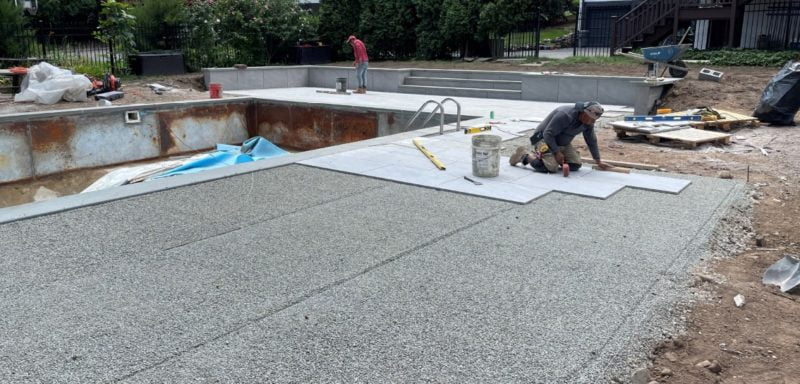
One of the most popular myths about porcelain pavers is that they can’t be laid on sand. In fact, dry laying porcelain pavers on a sand and gravel base is the preferred installation method for most walkways, terraces, large patios, courtyards, and other landscape paving areas that are subject to moderate levels of foot traffic.

Porcelain pavers can be installed over any sand base, as long as the sand is compacted. This makes them ideal for patios and walkways in dryer climates. To install porcelain pavers over sand, the sand must be pre-compacted and struck off with a screed. It’s important to note that the sand cannot be dry compacted. It requires 5 to 6 percent moisture content for cohesive compacting and a smooth finish.

Are Porcelain Pavers Easy to Maintain?

alpine porcelain paver_20x40 (3 of 3)

Unlike natural stone pavers, porcelain pavers are very easy to clean and maintain. They can be cleaned with any standard household cleaner and, if needed, a low-pressure washing system. On the other hand, most natural stone pavers are much more sensitive to chemicals and usually require specific formulas for cleaning.

Thanks to their hardiness and weather resistance, it’s easy to clean porcelain pavers with just about any mild detergent. Simply mix liquid detergent with water, wipe the pavers clean, rinse with clean water, and brush the water away with a rubber broom or water pressure jet.

Do Porcelain Pavers Require Sealing?

metal porcelain paver (5 of 6)

In most cases, you don’t have to seal porcelain pavers. Unlike natural stone and concrete, porcelain pavers are virtually impenetrable by moisture thanks to their non-porous surface, which makes sealing unnecessary in most cases. However, it will be less likely to stain and easier to clean if sealed.

It’s important to note that polished porcelain pavers do require sealing. The polishing process these pavers are put through creates microscopic holes in their surface. Without sealing, grout and adhesive can become stuck in these holes during installation, producing a displeasing effect called grout haze.

Are Porcelain Pavers Suitable for Cold Climates?

Porcelain pavers are made of non-porous material, which means they absorb little to no moisture when used outdoors. This quality is helpful for those who live in climates where there’s a significant amount of rain or snow throughout the year. The non-porous nature of porcelain pavers also means they won’t crack when in freezing temperatures.

Porcelain pavers have weather-resistant qualities that make them ideal for use in any environment where temperatures drop below freezing. Porcelain pavers are an ideal option for outdoor spaces subject to harsh winter weather and freezing temperatures.

Though porcelain pavers require little winter maintenance, it’s a good practice to remove leaves, moss, and other debris from outdoor spaces with porcelain pavers. This is especially important if you have tile walkways to help reduce the likelihood of someone slipping in the rain, snow, or ice.

Porcelain pavers are ideal for various applications in both residential and commercial spaces. Contact us to find the perfect porcelain pavers for your outdoor design needs, whether you’re planning an entranceway, walkway, patio, terrace, pool deck, driveway, rooftop, or other outdoor design.